

Oh Deer: What Your Auto Insurance Covers When You Hit a Deer
If you’ve driven a Minnesota highway at dusk in late fall, you know the feeling. You’re cruising along, the sky’s going orange, and then two glowing eyes pop up on the shoulder. Your foot hovers over the brake and your heart does a little drum solo.
Welcome to deer season on the roads. From late October through November, deer are on the move. It’s mating season (the rut), bucks are distracted, and the days are getting shorter. That means more animals crossing roads right when most of us are driving to and from work in low light. Add in harvested fields and hunters pushing deer out of the woods, and fall becomes the riskiest time of year for a run-in.
Nobody plans to hit a deer, but plenty of Minnesotans do every year. The good news is that a little know-how goes a long way. Here’s what your auto insurance covers, what to do if it happens to you, and how to lower your odds of a close encounter.
Comprehensive vs. collision: which one pays?
This is the part that surprises a lot of people. Hitting a deer is usually not covered by collision coverage. It falls under comprehensive coverage, sometimes called “other than collision.”
Comprehensive is the part of your policy that handles damage you didn’t cause by driving into something. Think hail, theft, a tree branch falling on your hood, or a 150-pound animal jumping into your grille. Because hitting an animal is considered unavoidable, most carriers treat it as a comprehensive claim. That’s good news, since comprehensive claims are generally less likely to be held against you at renewal than an at-fault accident.
Here’s where it gets tricky. Say you swerve to miss the deer and end up in the ditch or clip a guardrail. Now you didn’t hit the deer; you hit something else. That’s typically a collision claim, which may carry a higher deductible and can count as an at-fault accident.
A few other things to keep in mind:
- Liability-only policies don’t cover deer damage. If you dropped comprehensive on an older car to save money, the repair bill is yours.
- Your deductible still applies. A $1,000 comprehensive deductible means the first $1,000 comes out of your pocket.
- Injuries are handled separately. In Minnesota, your Personal Injury Protection (PIP), or no-fault coverage, helps with medical bills for you and your passengers.
- Rental and towing coverage are optional add-ons. Deer repairs can take a while when body shops are busy in the fall, so these are worth a look.
What to do right after you hit a deer
It happens fast and it’s rattling. Take a breath, then work through these steps.
- Pull over safely. Get onto the shoulder, turn on your hazards, and stay buckled while you get your bearings. If it’s dark or traffic is heavy, staying in the car is often the safest choice.
- Check on everyone. Make sure you and your passengers are okay. If anyone is hurt, call 911 right away.
- Leave the deer alone. An injured deer is scared and can kick hard. Don’t try to move it or help it. If it’s blocking the road, call 911 so law enforcement can handle it.
- Report it if needed. If the car isn’t drivable, the deer is in the roadway, or there are injuries, call the police. A report can also help your claim go smoothly.
- Take photos. Snap pictures of the damage, the scene, the road, and the deer if it’s safe. Fur or blood on the bumper helps show it was an animal strike.
- Check your car before driving. Look for leaking fluids, loose parts, broken lights, or a hood that won’t latch. If anything seems off, call a tow.
- Call your agent. Let us know what happened as soon as you can. We’ll walk you through the claim and help you understand your deductible and coverage.
One more Minnesota-specific note: if you want to keep the deer for the meat, you’ll need a possession permit. Ask the responding officer or check with the Minnesota DNR before taking it home.
How to lower your odds of a deer collision
You can’t control the deer, but you can stack the odds in your favor.
- Be extra alert at dawn and dusk. That’s when deer are most active and when visibility is at its worst.
- Where there’s one, there’s more. Deer often travel in groups. If one crosses, slow down and expect a second or third to follow.
- Use your high beams when you can. On empty rural roads, brights help you spot eye shine sooner.
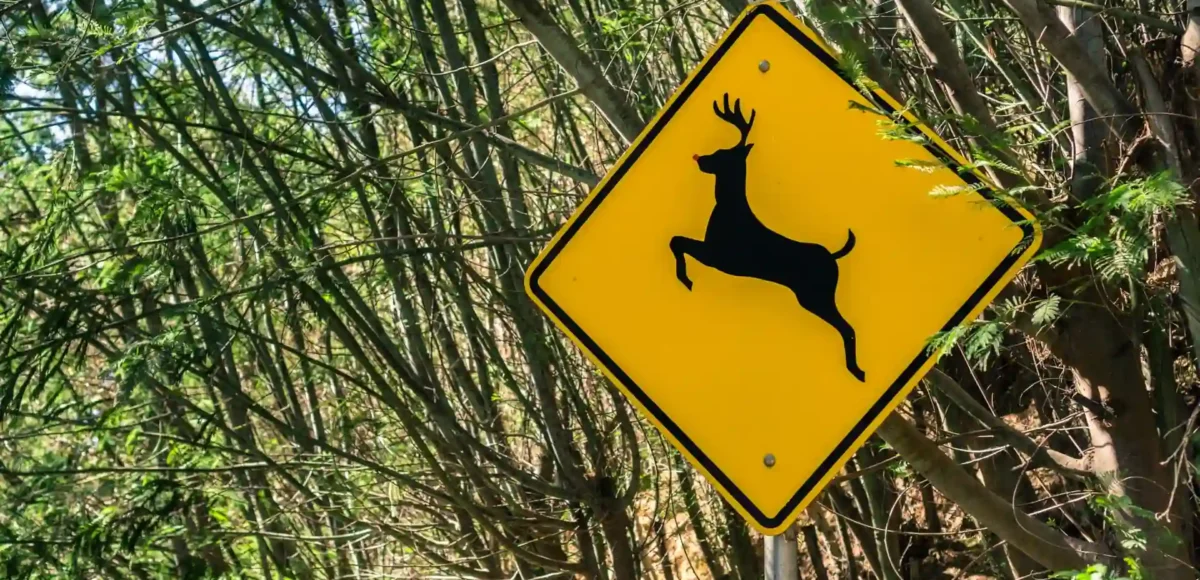
- Take the deer-crossing signs seriously. They’re posted where crashes have happened before.
- Don’t swerve. This is the big one. Brake firmly, hold the wheel steady, and stay in your lane. Swerving can send you into oncoming traffic, a tree, or the ditch, which is often far more dangerous than hitting the deer.
- Skip the gadgets. Deer whistles that mount on your bumper haven’t been shown to work reliably. Your attention is the best tool you’ve got.
- Buckle up and slow down. Lower speeds give you more time to react and make any impact less severe.
Check your coverage before peak season
The worst time to find out you don’t have comprehensive coverage is on the side of the road with a crumpled bumper. Now’s a great time to pull out your policy and ask a few quick questions:
- Do I have comprehensive coverage on every vehicle?
- What’s my comprehensive deductible, and could I comfortably pay it tomorrow?
- Do I have rental reimbursement and towing coverage?
- Am I still getting the best price for the coverage I need?
That last question is where we come in. As an independent agency, Quast Insurance works with more than 25 carriers, so we can shop your coverage instead of handing you a single option. Whether you want a quick policy review or a fresh round of quotes before winter, we’re happy to help.
Give us a call or stop by our White Bear Lake office. We’ll make sure you’re covered, so if a deer does jump out this fall, the only thing you’ll have to worry about is getting home safe.
Leave a Comment